
Plant owners sometimes encounter mysterious and worrisome issues with their plants, often leading to a moment of panic and a frantic search across websites, Google Images, Reddit, Quora, and any plant apps installed on their phones to identify the problem. Is it a disease? Is my plant going to die? Is it a parasite or some type of obscure pest I’ve never heard of? What do I do???
Just recently I found myself in this predicament, and my thoughts naturally homed in on the macabre, worst-case-scenario: my plant is dying. It turns out that was not the case, and I ended up learning quite a bit during my crazed research marathon on the Blind Prickly Pear (Opuntia rufida) cactus.
Listen, child, try to understand
Wild in the woods (Dead Can DancE)
All is not what it appears to be in the world at hand
Table of Contents
Blind Prickly Pear Basics
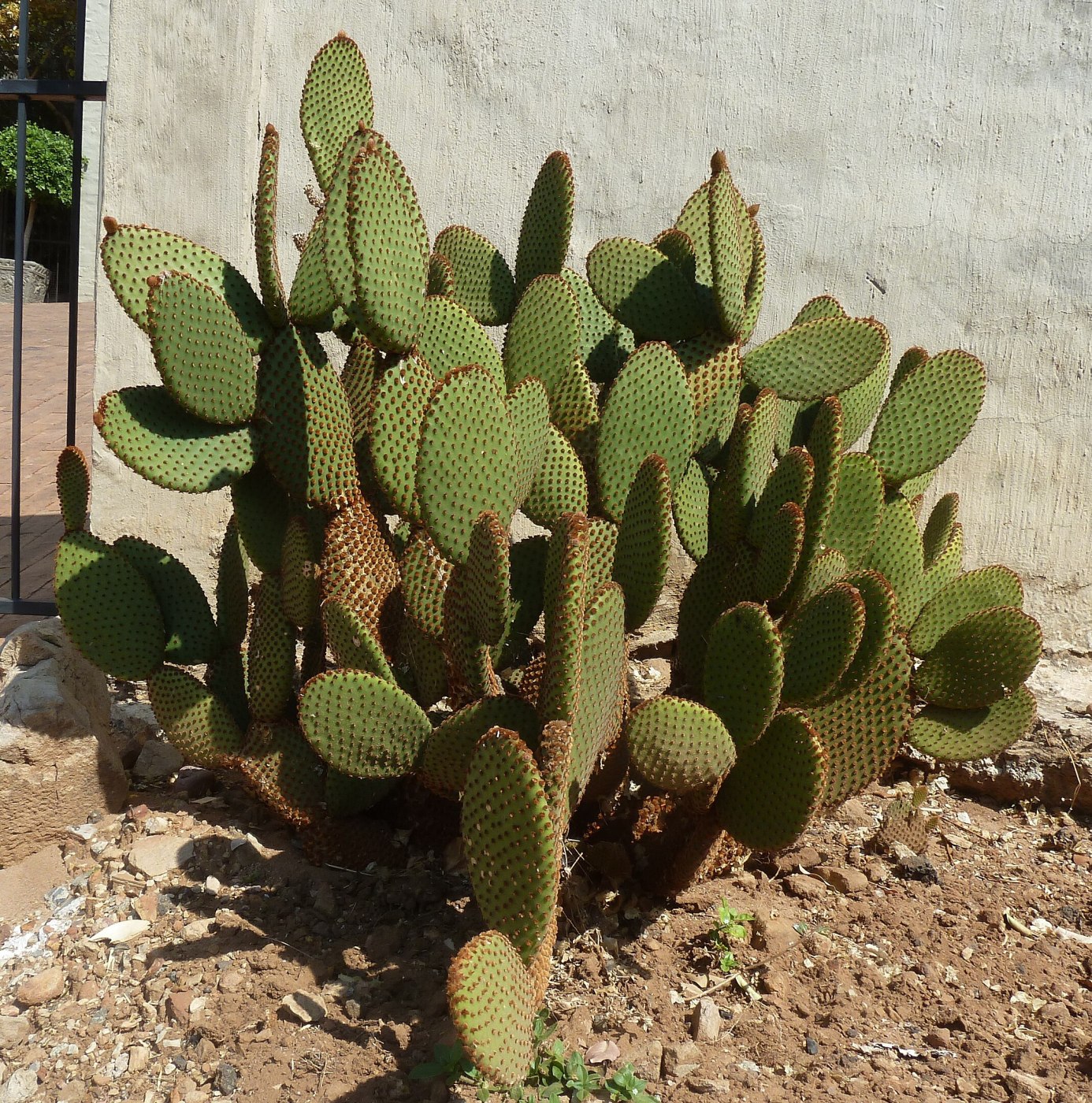


Opuntia rufida, often referred to as the Blind Prickly Pear, Cow Blinder, or Cinnamon Cactus, is a cactus shrouded in both beauty and danger. Native to the arid landscapes of Southwestern Texas and Northern Mexico, this cactus is notorious for a sinister defense mechanism.
The “blind” moniker is not merely a whimsical name; it speaks to a grim reality. The plant’s tiny, reddish-brown barbed prickles, known as glochids, are easily dislodged by the fierce desert winds. These airborne needles can travel considerable distances, posing a severe threat to any creature caught in their path. Animals, and sometimes even humans, can suffer temporary or permanent blindness if these glochids lodge in their eyes.
The macabre dance of nature and survival is starkly evident in the Blind Prickly Pear, where the beauty of its vibrant pads and flowers belies the peril that lurks within.
Opuntia rufida flowers mid-spring and bears 3 to 4-inch red or purple fruit during summer that are sweet and can be used in a number of recipes including syrup and margaritas. You need to be careful when handling the fruit, however, since they also have glochids on their surface. Getting one of these tiny prickles lodged in your skin isn’t very painful, but it is extremely irritating.

- Used Book in Good Condition
- Niethammer, Carolyn (Author)
- English (Publication Language)
The Blind Prickly Pear is easy to maintain and has the same care requirements as most other cacti, should you like to get one for yourself. They’re happiest outdoors in warm climates but will also do well indoors if given sufficient light. Check out Flora Macabre’s plant care repository for a detailed dive into informative facts about this plant.
So… What’s That Glob?
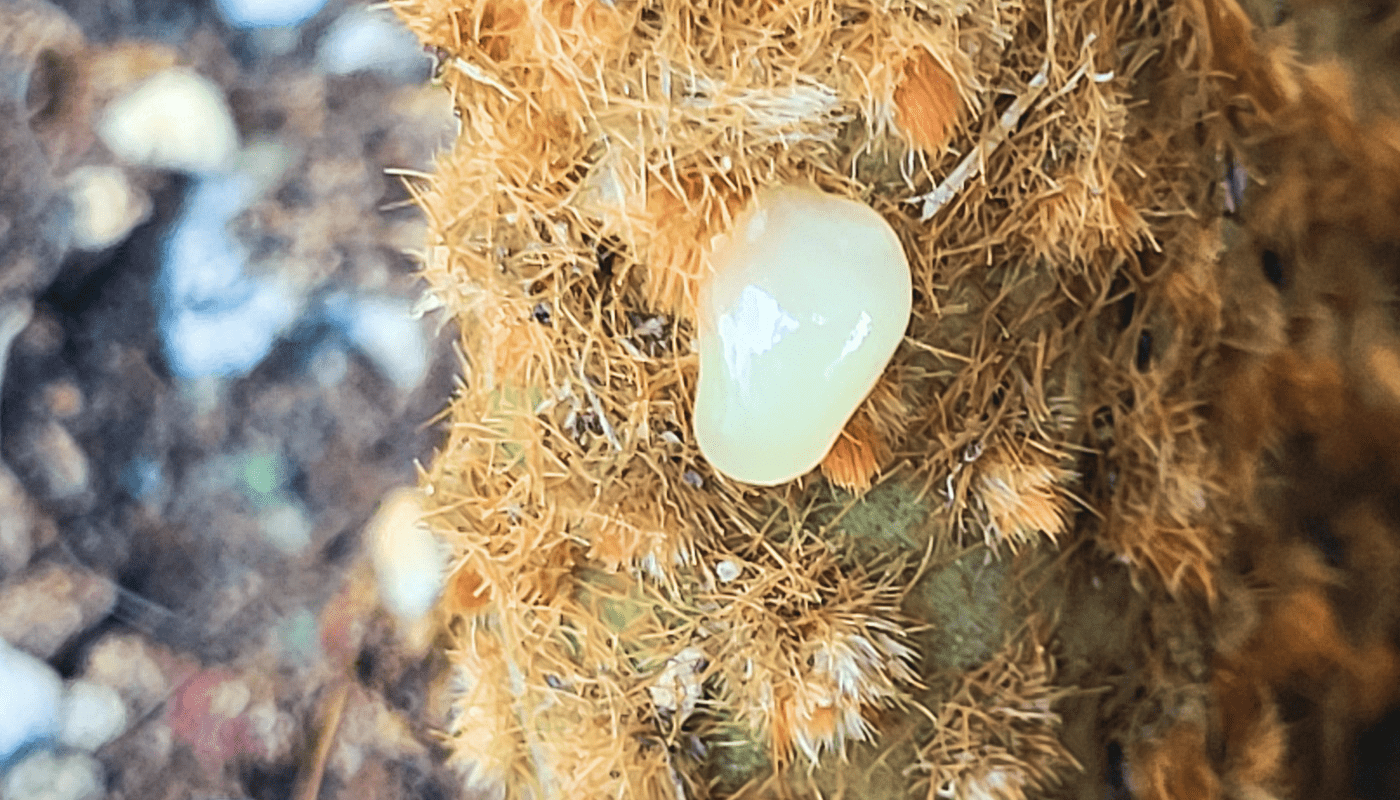
My first search produced very little information about the white stuff coming out of my cactus, and I couldn’t find any photos online relating to this phenomenon.
As I dug deeper into the cavernous depths of the internet, I discovered that it isn’t a disease, it isn’t a gelatinous insect egg, and it isn’t anything I should be worried about.

- Used Book in Good Condition
- Deardorff, David (Author)
- English (Publication Language)
The white glob is cactus resin (aka cactus juice, cactus sap or cactus blood). The dense, semi-solid white glob is excreted by some species of cacti as a means of defense. In other Opentia species the color of the sap can range from brown to amber. The resin has a scent and serves as a barrier that keeps invasive insects at bay while it works on healing itself.
This white cactus goo will often appear after the plant suffers a trauma. Once I found this out it was easy for me to pinpoint the cause. I had recently repotted the cactus and picked off several stunted paddles that appeared to be nutrient-deficient. I discarded the old soil and gave the cactus a fresh soil mix, then added a bit of fertilizer and a little bit of water. I believe the shock of the transplant produced the milky sap.
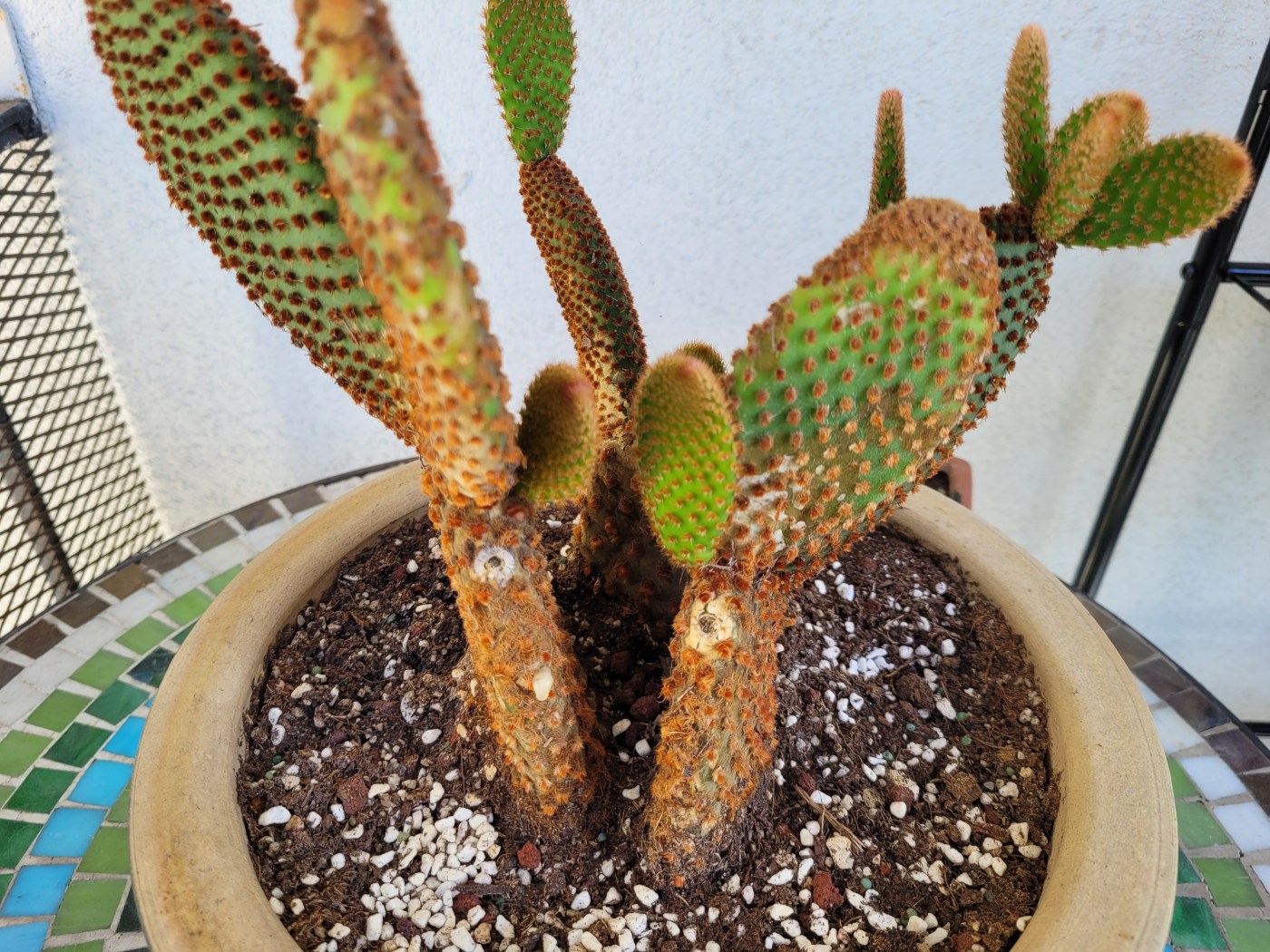
As you can see in the photo above, my cactus is much happier and exhibiting lots of new growth. The sap has hardened and can be seen in the lower part of the left base paddle (close to where one of the sickly pads once was). There’s a spider guarding the Blind Prickly Pear on the other side, which is also beneficial in keeping predators away.

Cactus Goo and Its Uses
The lifeblood of the prickly pear cactus may not be poisonous or toxic to humans, but its sinister cousins in the Euphorbia genus are not so benign. These malevolent plants, such as the ominously named Dead Plant, exude a milky sap that mimics the prickly pear’s in both appearance and consistency. However, Euphorbia sap is a dangerous venom, best approached with the utmost caution and protective gloves.
Euphorbia sap is highly toxic, and a mere touch or accidental ingestion can spell doom. Be ever vigilant not to confuse these treacherous plants, for that single mistake could be your last.
The prickly pear’s juice has long been celebrated for its potential to combat diabetes, high cholesterol, obesity, and even hangovers. The plant is also rumored to possess antiviral and anti-inflammatory properties, as if it holds secrets from ancient times.

- Knishinsky, Ran (Author)
- English (Publication Language)
- 144 Pages – 06/07/2004 (Publication Date) – Inner Traditions (Publisher)

Some studies suggest that extracts from the prickly pear cactus might alleviate the unpleasant aftermath of a night of revelry, possibly due to its anti-inflammatory effects. Preliminary research hints that this remarkable cactus can lower blood sugar levels in those with type 2 diabetes.
Opentia sap is frequently used topically to treat cuts, burns, and skin irritations in traditional medicine, as well, but beyond its healing properties, the resin can be purified and concentrated for use in different ways.
In the realm of art, cactus juice resin can be combined with pigments to conjure vibrant, otherworldly colors. These colors can then be molded into sculptures or painted onto canvas, creating masterpieces that echo with a touch of the terrestrial. Its adhesive properties also make it a formidable glue for various materials, including wood, ceramics, and even glass.


Renowned for its haunting transparency, the resin allows light to pass through, bestowing jewelry with an ethereal and captivating allure. When mixed with beads, gemstones, or other decorative elements, it forms unique and mesmerizing pieces that seem to whisper secrets from another realm.
In the fascinating world of plant care, where beauty often masks danger and there’s always something new to learn, the Blind Prickly Pear stands as a testament to nature’s duality. From its sinister glochids to its healing sap, this cactus embodies both peril and resilience. As I navigated the labyrinth of plant ailments and remedies, I emerged with a deeper understanding and appreciation for the elegance of the natural world.
Globs or not, the Blind Prickly Pear is a captivating addition to a goth garden, reminding us that even in the plant kingdom, appearances can be deceiving.

- We guarantee plant’s safe arrival otherwise we will refund or send you a replacement plant
- Opuntia Rufida Minima is a miniature prickly pear version also known as Cinnamon Cactus which only grows to approx. 8″ to 10″ in height. The pads are covered with very small brownish-cinnamon colored…
- Its spikes are small therefore you have to be careful when touching it.