


A truly enchanting oddity, Lithops is commonly referred to as Living Stone and Pebble Plant. Indigenous to various regions of South Africa, the succulent’s hues and patterns enable it to effortlessly assimilate into its surroundings. This helps the plant to remain hidden from hungry predators.
Remarkably, new species are still being unearthed due to their excellent camouflage abilities. Since Lithops‘ initial classification in 1811 by William John Burchell, 37 species have been identified in the wild. Furthermore, over 145 varieties have been generated through controlled breeding and hybridization.
Born of the Night, they lurk in the shadows
Nox Arcana (Darkness Rising)
Gargoyles of living stone
Lost souls who wander mist-shrouded cemeteries
And vampires who dwell deep within forbidden crypts
Today, Lithops is a popular houseplant worldwide, and a collectible for many succulent enthusiasts. For gothic gardeners, it is the gargoyle of the plant kingdom.
Table of Contents
Lithops and the Symbolism of Living Stone
When contemplating the essence of Gothic architecture and literature, there is one symbol that stands (or perches) above the rest: the gargoyle.

Gargoyles have a rich history dating back to medieval times, where they were often used in Gothic architecture to serve a practical function and add a touch of magnificence to the structures they adorned. These carved stone figures, also known as grotesques, were meticulously crafted with their own unique designs and expressions.
The symbolism behind gargoyles goes beyond their role in directing water away from buildings, as they are also revered for their role as protectors (a form of apotropaic magic) standing guard over churches and cathedrals.
Over time, gargoyles have become iconic figures in popular culture, appearing in literature, film, television, and art as mysterious, otherworldly, and sometimes murderous creatures with a captivating allure.
In 1932, the short story The Maker of Gargoyles by H.P. Lovecraft’s literary partner Clark Ashton Smith gave gargoyles a new ability that has evolved and gained popularity ever since. Smith transformed the weird sculptures into living stone that wrought havoc on his fictional French province of Averoigne and later killed their creator.


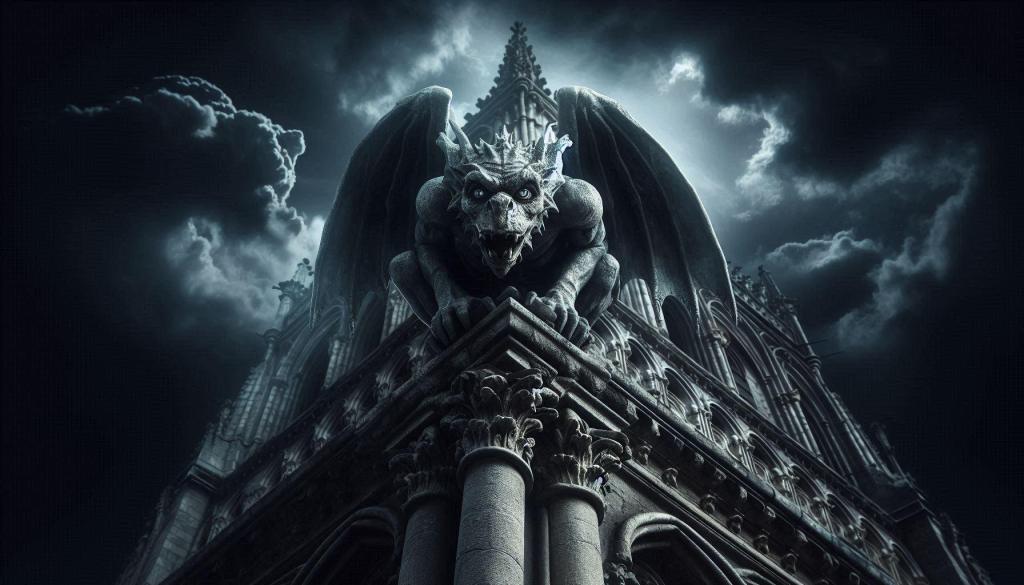
While Lithops is unlikely to engage in a killing spree, we can still see the connection to the modern gargoyle. Both Lithops and gargoyle share the notion of living stone, both are strange and unique in appearance, and both hold similar metaphysical meanings. Lithops also routes water for a singular purpose, much like the classic gargoyle.
The Living Stone succulent is a symbol of resilience, spiritual fortitude, and sustainability because survival in their natural environment greatly depends on strength in the face of adverse conditions. The South African deserts Lithops grows in are subject to long dry spells and drastic temperature fluctuations.
Water is stored so that they persevere through arid conditions, and new growth occurs during colder, wetter months under the insulating protection of older leaves. Their mimicry of surrounding stones wards off herbivores with ill intent just as gargoyles mystically ward off evil.
Besides a correlation with gargoyles, the term “living stones” is also found in some passages of The Bible. Living stones is an allegory for religious followers and the strength they represent when present in great numbers, according to the writings of St. Peter. Living stone is also used as an allegory for Jesus Christ’s foundational role in the Christian faith. He is cited as the “living cornerstone of God’s temple.”
And coming to Him as to a living stone which has been rejected by people, but is choice and precious in the sight of God, you also, as living stones, are being built up
1 Peter 2, New American Standard Bible

Regardless of one’s spiritual inclinations, the symbolic power of living stones is undeniably powerful.
Lithops Care
Lithops is frequently grown from seed, but you can also find adult specimens at many retail nurseries and online marketplaces like Amazon and Etsy. The plant is remarkably easy to care for and can live for more than 50 years when properly tended to.

Living Stone plants need well-draining succulent soil and very little water. Overwatering spells certain death for Lithops. Too much moisture will lead to root rot. It can even cause leaf bursting from its cells exceeding their storage limits.
Keep the plant in a sunny window indoors and only water it when you see its typically bulbous leaves wilt and deflate, giving it a wrinkly appearance. That’s your indication that it needs a good soaking. Rest assured that Lithops can tolerate dry soil for a very long time. It needs these long intervals of dryness to survive.
Lithops don’t need humidity and should not be misted. These will also lead to root rot and fungal diseases that Living Stones aren’t capable of dealing with. This succulent thrives on neglect, so just let it be.
Depending on the species and environment it’s kept in, the plant may enter a dormant or semi-dormant period during the winter. When you see Lithops‘ leaves drying up during this time, don’t panic. That is the normal cycle for these plants, and you’ll soon see the new leaves that have been growing within it emerge from the decay. This cycle repeats itself year after year, and the plant will be slightly larger each time it regrows. Only repot it once it has fully outgrown its pot.

Lithops don’t require fertilizer, as they’re accustomed to nutrient-deficient soil. If you absolutely can’t resist, give it a heavily diluted cactus fertilizer on one of those rare watering days each year.
If you live in USDA Plant Hardiness Zone 9-11, this plant can be kept outdoors as long as it’s kept in a dry spot where you can regulate the water supply.
Your little gargoyle will briefly reward you with a sublime flower each year to let you know it’s contented, which is far more than you’d get from a pet rock.


Lithops are a fascinating addition to any goth garden. Their striking appearance and low maintenance requirements make them a popular choice for both experienced and novice gardeners. With their distinctive stone-like appearance and remarkable ability to store water, Lithops are an extraordinary example of unconventional beauty and resilience. They are the gargoyles of the plant kingdom and are certain to imbue an air of intrigue to an otherwise ordinary collection.

