

As Halloween nears and the spirits awaken, we crave tales that chill our very bones. But beyond ghosts and ghouls, the plant world hides its own dark secrets—terrors that could make even the bravest soul shudder. In the grisly depths of the flora kingdom lie some of nature’s most intriguing and macabre specimens: parasitic plants.
Much like the legendary vampires of folklore, vampire plants survive by leeching off their hosts, drawing essential nutrients and water from them like blood from a vein. Let’s bite into their gruesome habits and determine if they belong in a gothic garden or would be a suitable houseplant horror.
There’s a crack in the mirror
Concrete Blonde (Bloodletting (The Vampire Song))
And a bloodstain on the bed
Oh, you were a vampire
And baby, I’m the walking dead
Table of Contents
Dodder: Entangling Vampire Plants
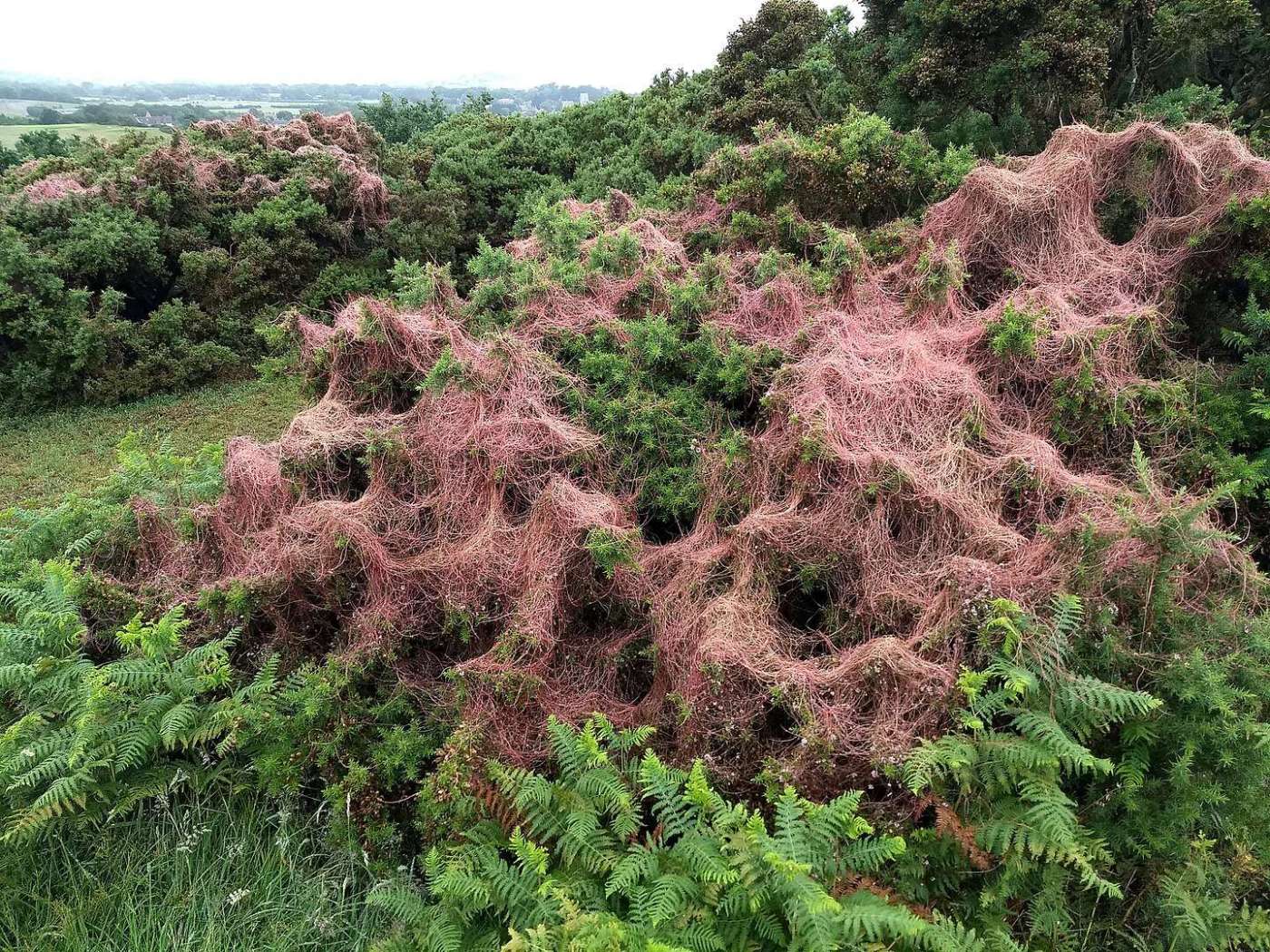
Dodder (Cuscuta spp.), also known as Strangleweed or Witch’s Hair, is a parasitic plant that wraps itself around the stems of its host plants, sinking its haustoria (specialized feeding structures) into the host’s vascular system to draw out water and nutrients. Unlike most plants, dodder lacks chlorophyll and cannot photosynthesize, so it relies entirely on its prey for survival. Its vampiric nature is evident in its method of parasitism. Like a vampire’s fangs, its haustoria penetrate the host’s tissue, siphoning off life-sustaining fluids. Its pale, yellowish-orange stems and twining habit give it an eerie, otherworldly appearance, reminiscent of a vampire’s pallor and writhing serpents.
Dodder’s aggressive parasitism and potential to harm its hosts make it unsuitable as a houseplant. However, in a carefully managed gothic garden, dodder could add an element of eerie fascination, particularly if allowed to twine around less vulnerable or sacrificial host plants. Its spectral presence and sinister behavior would certainly contribute to a goth garden’s dark allure.
Caring for this plant is moderately easy. Since dodder gets its water from the host plant, it doesn’t require regular watering. It doesn’t need soil either, as it attaches to host plants. It merely needs a suitable host to survive.

Dodder can parasitize a wide range of plants. Among vegetables, it targets tomatoes, potatoes, carrots, onions, peppers, and beans. In ornamental gardens, it can latch onto chrysanthemums, petunias, morning glories, and ivy. It also infests legumes such as alfalfa, clover, soybeans, and vetches, along with other plants including dahlia, helenium, trumpet vine, azaleas, and rhododendrons.
This ability to infest such a diverse array of plants makes dodder a significant threat in both agricultural and ornamental settings. If you’re considering growing dodder, it’s crucial to manage it carefully to prevent it from spreading uncontrollably and harming other plants.
Mistletoe: Silent Invaders
The kiss of mistletoe (Viscum spp. and Phoradendron spp.) is not one of carefree romance. Mistletoe is a well-known parasitic plant that attaches itself to the branches of trees and shrubs. Through its haustoria, it taps into the host’s xylem to extract water and nutrients.

Despite its parasitic nature, mistletoe can photosynthesize to some extent, using its evergreen leaves to produce energy. Its vampiric traits are subtly sinister. It silently invades its host, often going unnoticed until it has established itself. Like a vampire blending into society, mistletoe’s green leaves can appear inconspicuous. However, its ability to drain its host over time reveals its true nature.
Mistletoe is not suitable as a houseplant due to its dependency on host trees. However, it can be an intriguing addition to a gothic garden. Its evergreen nature adds year-round interest, and its association with ancient folklore and mysticism complements the gothic theme. Care must be taken to manage its spread to prevent harm to desirable trees and shrubs.

Mistletoe can attach itself to a variety of trees, including apple trees, oak trees, poplar trees, ash trees, walnut trees, maple trees, aspen trees, and elm trees. It thrives particularly well on hardwood species1. Like dodder, mistletoe does not need water or soil to survive since it drains its host to sustain itself. It does prefer full sun, however, so it’s best to spread the seeds high up in the tree where they can get plenty of light2.
Should you choose to invite this vampire into your garden, keep an eye on the host tree for any signs of stress or disease, as mistletoe will sap some of its energy away. Applying fertilizer in spring and ensuring the host tree is well-watered, especially during dry periods, can help maintain both the host and the mistletoe3.
Rafflesia: The Corpse Flower

Rafflesia (Rafflesia arnoldii), often referred to as the “corpse flower” due to its foul odor, is one of the most bizarre parasitic plants. It has no leaves, stems, or roots of its own, existing entirely as a network of threads within its host, typically a vine of the genus Tetrastigma. When it blooms, it produces the largest flower in the world, exuding a stench similar to rotting flesh to attract pollinators.
Rafflesia’s vampiric attributes are both grotesque and fascinating. It hides within its host, revealing itself only during its brief, dramatic flowering period. The flower’s blood-red hue and putrid smell epitomize decay and death, akin to a vampire’s lair filled with the scent of blood and rot.

Rafflesia’s specific host requirements and unique growth habits make it unsuitable as a houseplant. Additionally, replicating its natural conditions in a garden setting is challenging. However, its macabre allure and monstrous bloom would make it a prized specimen in a gothic garden, provided the right environmental conditions and host plants are present.
Rafflesia requires a warm, wet climate to support its growth and the health of its host plant. Its primary host is the Tetrastigma vine, a tropical vine related to the grape family. This corpse flower will only show itself to bloom, much like the undead vampire emerging from its coffin.
Indian Pipe: The Ghost Plant
Indian Pipe (Monotropa uniflora), also known as the ghost plant or corpse plant, is a myco-heterotrophic plant that relies on mycorrhizal fungi to obtain nutrients from nearby tree roots. This ethereal white plant lacks chlorophyll and appears ghostly against the forest floor, exuding a vampiric aura.

Like a nocturnal vampire emerging from the shadows, Indian Pipe rises from the forest floor, drawing sustenance indirectly from its host trees. Its pale, waxy stems and drooping flowers resemble spectral figures, adding to its eerie charm.
Indian Pipe is another challenging plant parasite to cultivate as a houseplant due to its reliance on specific fungal partners and host trees. However, it can thrive in a shaded, moist gothic garden with the right conditions. Its otherworldly appearance and unique growth habit make it a perfect fit for a garden designed to evoke mystery and melancholy.

Indian Pipe thrives in deep shade with moist, well-drained, humus-rich soil, often found in forest understories. To cultivate it in your gothic garden, ensure the soil stays consistently moist but not waterlogged, and add organic matter like compost. This plant relies on mycorrhizal fungi for nutrients, so having various deciduous or coniferous trees like American beech and Douglas fir can support its growth. Keep an eye on moisture levels, use mulch to retain soil moisture, and promptly address any signs of stress or disease to ensure this spooky specimen thrives in your garden.
Broomrape: The Floral Vampire

Broomrape (Orobanche spp.) is a genus of parasitic plants that attach to the roots of various host plants, extracting nutrients and water through their haustoria. They produce striking, sometimes colorful flowers, but lack chlorophyll, relying entirely on their hosts for sustenance.
Broomrape’s vampiric qualities are evident in its hunger to feed on host plants. Its haustoria, like a bloodsucker’s fangs, penetrate the host’s roots to drain vital nutrients. The plant’s lack of chlorophyll and reliance on others for survival echo the parasitic nature of vampires. Its sudden flowering among its unsuspecting hosts adds to its vampiric mystique.
Broomrape can be challenging to manage as a houseplant due to its parasitic nature. However, it can find a place in a gothic garden, where its unusual flowers and parasitic behavior contribute to the garden’s eerie ambiance. Care must be taken to ensure it does not harm desirable plants in the garden.

Broomrape parasitizes a variety of plants, including tomatoes, eggplants, tobacco, peppers, potatoes, carrots, celery, lettuce, sunflowers, and many ornamentals including petunias, snapdragons, and nicotianas. To cultivate it in a gothic garden, ensure it has suitable host plants and is planted in full sun with well-drained soil. Watering should align with the host plant’s needs, and the soil should be rich in organic matter. Careful monitoring is necessary to prevent over-parasitism and manage broomrape’s spread effectively.
Parasitic Plants in Gothic Gardens
A gothic garden is a place where dark beauty and eerie elegance come together, creating an atmosphere of mystery, drama and intrigue. Parasitic plants can enhance the eerie aesthetic of a gothic garden with their unusual appearances and macabre growth habits. Their presence adds an element of the unexpected, as they rise from the shadows and intertwine with their hosts to satiate their needful hunger. This interplay of life and death, sustenance and parasitism, echoes the themes often found in gothic literature and art.

From the ghostly Indian Pipe to the sinister Dodder, these plants captivate the imagination and add an element of macabre beauty to gardens. While some may be challenging to cultivate as houseplants, their inclusion outdoors in a gothic garden can contribute to an atmosphere of grim enchantment.
These plants, like vampires, thrive in the shadows, drawing life from their hosts and weaving a tale of survival and symbiosis. Whether in a haunted garden or an eerie corner of the wild, parasitic plants continue to fascinate and inspire.
Would you consider adding any of these parasitic plants to your garden? Share your thoughts in the comments below.