

Most gardening websites will tell you that gothic gardening is all about plants with dark foliage – the blacker the better – and leaving dead bits intact instead of pruning and deadheading expired growth.
Some informants will direct you to mimic the elaborate designs of Victorian gardens in the 19th century, while others will describe goth gardening as a celebration of Halloween 365 days a year.
I won’t say that these other sources have totally missed the mark, but I’m inclined to tell you there’s a whole graveyard of untold truths waiting to be unearthed from beneath those stereotypical impressions. As a seasoned goth who gardens, you could say I’m an authority on the subject.
Through the chambers of the brain sweep phantoms more terrible than reality itself, and instinct with that vivid life that lurks in all grotesques, and that lends to Gothic art its enduring vitality, this art being, one might fancy, especially the art of those whose minds have been troubled with the malady of reverie.
Oscar Wilde (The Picture of DORIAN GRAY)
Table of Contents
The Origins of Gothdom
To understand what goth gardening is, you first need to understand what goth is.
The term “goth” describes a subculture of people primarily defined by their shared taste in music. The term “gothic rock” was coined by music critic John Stickney in 1967 to describe a meeting he had with The Doors' Jim Morrison in a dimly lit wine cellar. Subsequently, the term “gothic” was used to describe a new post-punk style of music introduced by bands such as Joy Division and Siouxsie and the Banshees that eventually gained popularity in the early 1980s with music by Bauhaus, The Cure, Virgin Prunes, and The Damned, to name a few. Their success was followed by more goth rock bands such as Sisters of Mercy, Fields of the Nephilim, and Alien Sex Fiend later in the decade.



The gothic subculture that emerged from this music (often described as gloomy, theatrical, and grim) drew influence from the tragedy and mystery of Romantic and Gothic literature, fables and ancient mythologies, the supernatural, horror films, and B-movies. Goths then developed a dark, eerie, often dramatic, mysterious and macabre style of clothing from these influences as part of their identity. The color black is featured prominently.


Today there are many types of gothic variations in both music and fashion, but a common appreciation for the influences that shaped the subculture keeps the Deathrockers, Trad goths, Cybergoths and the like united under the “goth” sobriquet.

Gothic Gardening Defined
Goth gardening, therefore, is a style of gardening that embraces the core influences of the gothic subculture: the moody, mysterious, and macabre; the odd and eerie, dark and dramatic. It’s about recognizing the tenets of goth music and fashion in the inscrutable resplendency of the Flora kingdom.
How you achieve this is up to you. Just as there are many types of goths, there can be many types of goth garden.

Note that the basics of traditional gardening still apply. One needs to select plants that will thrive in the environment they’re placed in, which means researching light requirements, soil requirements, humidity and temperature needs, as well as the watering and fertilizing preferences of your chlorophyllic collectibles.
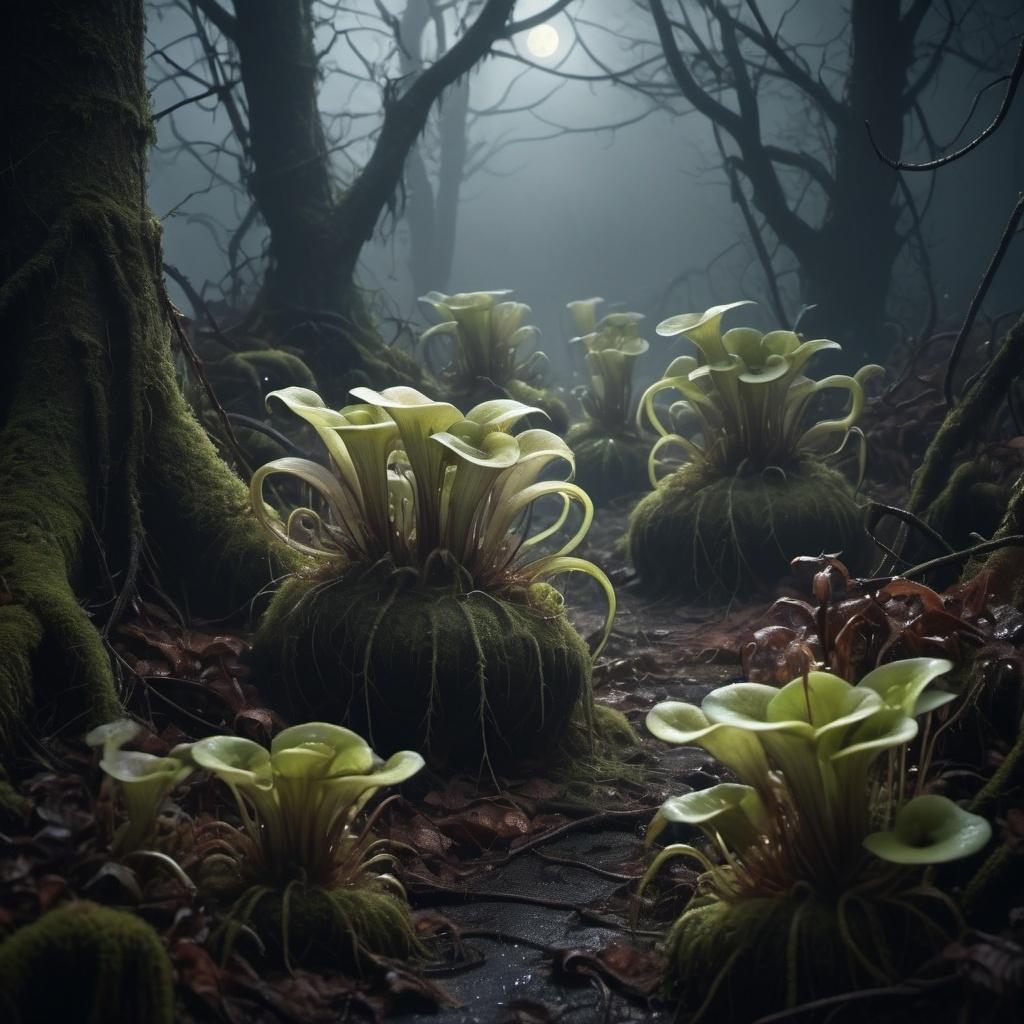
Depending on the conditions that you can provide, you may want to care for an assortment of strange succulents, indulge your morbid curiosities with carnivorous plants, or make a dramatic statement with dark and exotic tropicals. Perhaps you’re more inclined toward cacti in a coffin, or snake and spider plants sticking out of skulls. Queue up Peter Murphy's Cascade and let your crepuscular creativity fly like a bat in the night!
In the words of Edgar Allan Poe, “there is no exquisite beauty without some strangeness in the proportion.” If I still haven’t convinced you of my expertise on the subject, take this advice from a master of the macabre. Embrace the mystery, embrace the drama, and design your goth garden with gloriously exquisite beauty. Hopefully this website can help you along the way.
If you’d like to explore the roots of goth rock music further, here are seven sinfully serene staples that belong in every nyctophile’s collection:


